


Employee Engagement Strategies for 2026: The Role of F&B Experiences in the Workplace


In 2026, employee engagement matters more than ever for creating a workplace experience where people feel genuinely connected and valued. But here's the challenge many HR and facilities teams face: how do you create employee engagement activities that people actually want to participate in? And once you've planned something, how do you ensure it doesn't feel forced or go unnoticed?
The answer often lies in the simplest, most human moments—the ones centred around food, connection, and genuine breaks from work. Rather than relying on elaborate, one-off events alone, forward-thinking organizations are discovering that thoughtful food and beverage (F&B) experiences are catalysts for authentic employee engagement activities and workplace experience improvements.
What Is Employee Engagement?
Employee engagement is the degree to which employees feel motivated, connected, and invested in their work, workplace culture, and overall employee experience.
Engaged employees don't just show up—they participate, collaborate, and contribute to a culture where others feel welcome to do the same.
So, what can organisations do to encourage meaningful engagement in the workplace? Rather than relying solely on one-off events, consider creating a mix of everyday opportunities and planned experiences.

Employee Engagement Strategies for 2026
The most effective employee engagement strategies for 2026 address what people genuinely value: growth, respect for their time, belonging, and recognition. Here's how these strategies work together to build lasting engagement:
Create opportunities for growth Give employees access to learning, development and career growth opportunities. When people can see how their organisation supports their long-term development, engagement can extend beyond their immediate role.
Build a culture of recognition Make appreciation a regular part of the employee experience. Recognising contributions, milestones and achievements can help employees feel valued and connected to the organisation.
Strengthen everyday connection Create spaces and opportunities for employees to interact beyond their immediate teams. Informal conversations, shared breaks and collaborative spaces can help build stronger workplace relationships.
Make the workplace more inclusive Design employee experiences that accommodate different preferences, cultures and ways of participating. Inclusion can be reflected in everything from workplace activities to the food and experiences made available to employees.
Create moments employees look forward to Employee engagement activities do not have to be elaborate. Monthly themes, festivals, corporate events, games, pop-ups and other moments of surprise can add variety to the working day and give employees opportunities to participate together.
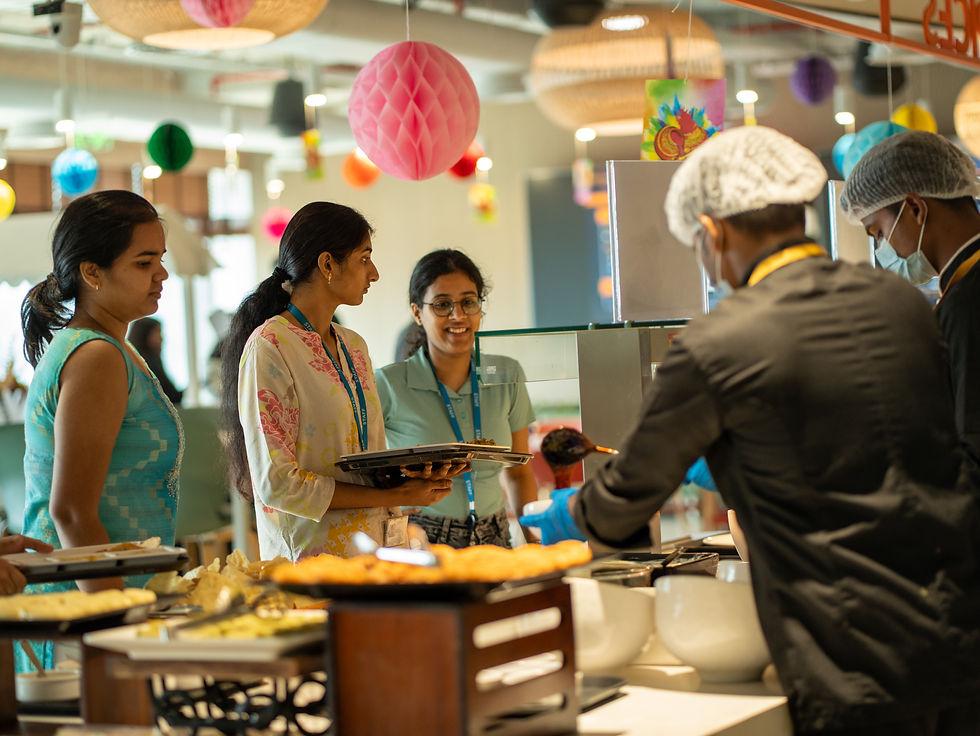
Use F&B to encourage connection Food and beverage can complement broader engagement strategies by creating natural opportunities for employees to gather. From shared meals and themed food experiences to pop-up counters, F&B can make everyday workplace interactions more social without requiring formal participation.
Support wellbeing through the everyday experience Consider how the workplace enables employees to pause, recharge and take meaningful breaks. Accessible spaces, thoughtful food choices and opportunities to step away from work can contribute to a more supportive workplace experience.
Give employees a voice Engagement is stronger when employees feel heard. Regularly seeking feedback on workplace experiences, activities and amenities can help organisations understand what employees value and where their needs are changing.
Why Is F&B Important for Employee Engagement?

The data is clear: F&B isn't a nice-to-have—it's foundational to how people connect at work.
According to Compass Group's Power of Socialisation Report, 69% of colleagues actively try to catch up with others over food or drink during the workday. But here's what's even more revealing: when F&B facilities are available, employees have frequent short-break socialisation moments at 60% frequency, compared to just 48% in workplaces without dedicated facilities. The presence of food and beverage infrastructure directly enables the moments where real connection happens.
The impact grows from there. Among colleagues who lunch together regularly, 85% engage in frequent casual conversations, compared to only 48% who don't share meals. And this casual connection translates directly into team participation: 61% of employees who lunch together also participate in company team building events, workplace celebrations, and social gatherings—compared to just 14% who don't lunch together.
Even weekly social patterns shift with F&B support: 74% of employees enjoy weekly social lunches when F&B amenities are available, versus 48% without them. For HR and facilities teams, this data translates to a simple truth: F&B creates the conditions where engagement naturally takes root.
Read SmartQ’s comprehensive guide on the role of F&B in workplace socialization here.
How does F&B help in employee engagement?

Naturally brings people together Shared meals and breaks create easy opportunities for employees to connect and have informal conversations, without requiring a structured activity.
Creates a focal point for corporate events Food can bring a theme or celebration to life, making corporate events more engaging while giving employees a natural reason to participate and connect.
Encourages casual conversations Eating together can create more frequent, informal interactions between colleagues, helping build relationships beyond their immediate teams.
Enables Higher Participation Rates with Less Friction Food gives employees a natural reason to come together, making it easier to participate in workplace activities and increasing engagement across other initiatives and events.
Breaks the monotony of everyday work Themed menus, pop-up counters and special food experiences can add variety to the working day, giving employees something interesting to look forward to.
How to implement F&B for employee
engagement?

As an HR or facilities leader, the path forward is clear: stop thinking of F&B as separate from your employee engagement strategies. Instead, use it as the foundation upon which all your engagement activities rest.
This might look like:
Auditing your current F&B infrastructure: Do you have inviting spaces? Consistent, quality offerings? Enough variety to reflect your workforce?
Testing small interventions: Introduce a pop-up station or monthly themed lunch to see what resonates.
Gathering feedback: Ask your team what variety, timing, and formats would make them more likely to pause and connect.
Scaling what works: Once you identify the activities that drive genuine participation and connection, invest in making them sustainable.
Strong employee engagement is built through a combination of culture, connection, recognition and everyday workplace experiences. F&B can strengthen these efforts by creating simple, natural moments for employees to connect, participate and take a meaningful break from work. When thoughtfully integrated into broader employee engagement strategies, it can help turn the workplace into a space people feel more connected to and look forward to being part of.
Looking to make F&B part of your employee engagement strategy?
SmartQ curates thoughtful workplace experiences designed to encourage employee engagement — from pop-up counters and food festivals to corporate and themed events, games, activities and décor.
Get in touch to explore how F&B can help transform your workplace employee engagement, or write to us at growth@thesmartq.com.


Comments