


A National Fuel Crisis. Three Cities. Not a Single Meal Missed.
- Sahana B
- 2 days ago
- 4 min read

When a national LPG shortage hit commercial kitchens across India, SmartQ had to find a way to keep feeding thousands of employees every single day. Here's what happened.
It started like any other morning. Thousands of employees walking into their office cafeterias across three cities, ready for breakfast. Hot food, familiar faces at the counter, the usual start to the day.
But behind the scenes, something was going wrong. LPG, the cooking gas that most commercial kitchens run on was running short across India. And for SmartQ, which manages food services for multiple large enterprise clients across India, this was a serious problem.
At a large U.S.-based financial institution, SmartQ manages food and beverage operations across all its India offices, serving a workforce of over 36,000 people across multiple cities, cafeterias, and food sessions. When the LPG crisis threatened operations at this scale, the SmartQ team faced a critical question: how do you keep feeding over 36,000 people every day when your primary fuel source is drying up?
Feeding 36,000 people a day is not a small promise to keep

The client runs large service and technology offices in Bengaluru, Hyderabad, and Chennai. Thousands of employees come in every day, and the cafeteria is a core part of how their workplace runs.
This isn't just about food. When a cafeteria goes down, employees notice. It affects how people feel about being at work. And for SmartQ, it would mean breaking a promise to a client that trusts us to keep things running, no matter what.
We didn't wait for the crisis to knock on the door, we were ready.
When the war broke out in West Asia, the SmartQ leadership anticipated the effect it might have on our food operations, considering most of our food partners rely on LPG as their primary fuel source.
The team didn't wait for things to get worse. Over several days of focused problem-solving, SmartQ's operations, supply, and kitchen partner teams worked through every option, looking at each cafeteria individually. What cooking equipment was available? How much LPG does each kitchen need? What could be switched to electric cooking? What menu changes were possible without affecting the quality or quantity of food?
What came out of this wasn't a single plan for everyone. Each kitchen partner got a plan that made sense for their specific setup.
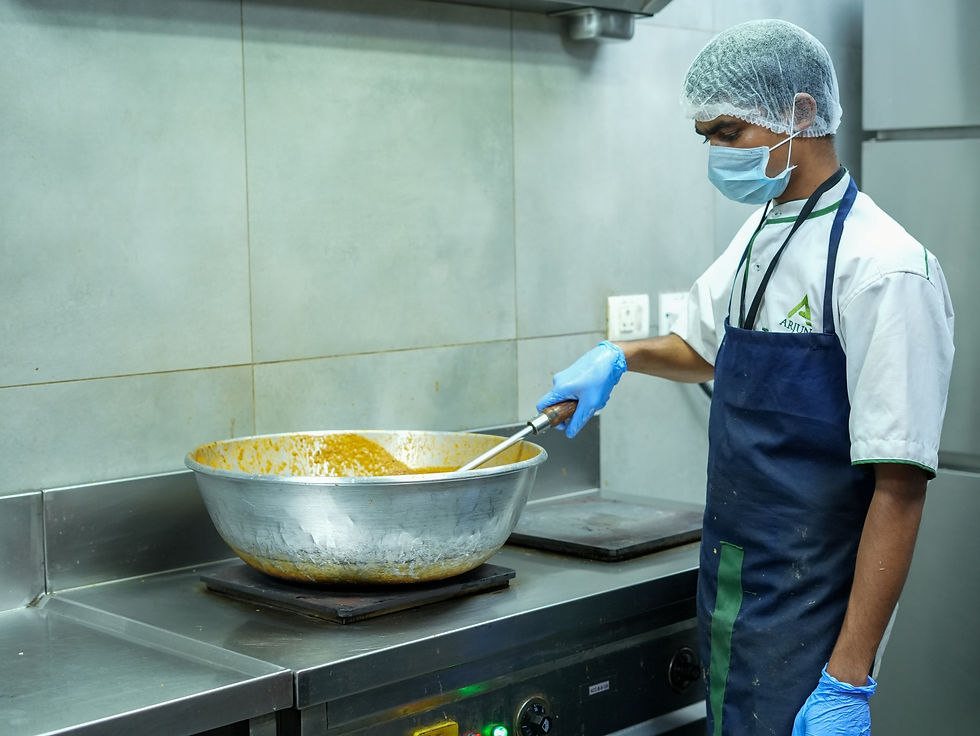
One of our partners had a central base kitchen. For them, the plan was about smart fuel management: securing enough LPG supply in advance, setting up backup cooking, and monitoring usage every day. About 70% of the meals continued to be prepared at the central kitchen, while the other 30% of operations were shifted to the client cafeteria, where electric equipment was available. The menu got a little shorter, but food quality and portion sizes stayed the same.
Another partner had no base kitchen - everything was cooked on-site at the client cafeteria using electric equipment. They continued to serve their regular menu without disruptions.
Same food, same portions - Just a different way of getting it done
Chennai: Partner A split cooking between the base kitchen and on-site at the client cafeteria, with a slightly reduced menu. Partner B kept all cooking on-site, no changes needed. Tuck shops ran as normal.
Bengaluru: Partner A did all cooking on-site at the client cafeteria with a slightly reduced menu. Partner B continued using LPG at the base kitchen with a reduced menu. Partner C moved 30% of cooking to the office site and kept the rest at the base kitchen. Tuck shops and live counters ran as normal.
Hyderabad: Partner A was already fully on-site at the client cafeteria, no changes required at all. Partner B used a mix of base kitchen and on-site cooking with a reduced menu. Partner C shifted entirely to on-site cooking with a reduced menu. Tuck shops and live counters ran as normal.
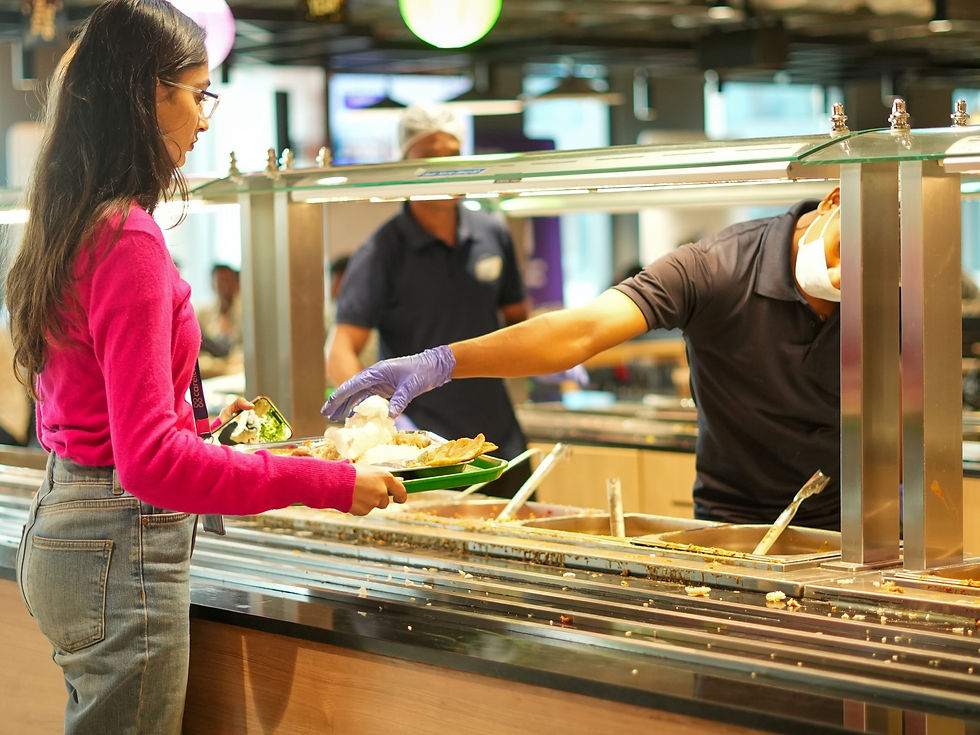
Across all three cities, meal counts stayed the same. Portions didn't get smaller. The only real difference employees noticed, if at all, was a slightly shorter menu for a period.
A national shortage hit. Here's everything it failed to disrupt.
Every cafeteria stayed open- no shutdowns, no reduced hours
Full meal volumes and portion sizes maintained throughout
No impact to contracts, SLAs, or costs for the client
Employee experience remained unaffected across all three cities
Kitchen partners were supported with flexible planning throughout
This is what it means to be a reliable partner.
Most of the time, food service runs smoothly, and no one thinks much about it. The real test of a partner is what happens when something goes wrong, something outside anyone's control, like a national supply shortage.
No single decision solved everything. Instead, a series of small, timely decisions was made in response to changing circumstances, and the team executed them with agility and resilience.
That's what being prepared looks like -not a dramatic save, but a steady response that keeps the promise to the client and to the thousands of employees who depend on it every day.


Comments