


Electric Cooking in Corporate Cafeterias: A Reliable Path Beyond the LPG Crisis
- noopuragashe2
- 6 days ago
- 3 min read

India’s commercial kitchens are facing an unprecedented disruption. The ongoing LPG crisis in India, driven by global supply chain instability, has significantly impacted corporate catering operations. As commercial LPG prices surge and availability becomes uncertain, many kitchens are being forced to rethink their dependence on a single fuel source. In this context, electric cooking is emerging as a practical, scalable path forward for corporate cafeterias.
The LPG Crisis in India: A Turning Point for Commercial Kitchens

India imports approximately 60% of its LPG requirement; out of which majority comes through the Strait of Hormuz, which has been disrupted due to the ongoing war; as written by India Today. According to a March 2026 analysis by the Takshashila Institution, nearly 90% of commercial kitchens in India run on LPG. When the government prioritised household cooking gas supply, kitchens across the country faced acute shortages, inflated black-market cylinder prices, and forced menu cuts.
The crisis affected several kitchens serving corporate cafeterias as well. In some cases, organizations temporarily shifted to work-from-home models—not as a workplace strategy, but as a way to reduce the burden on cafeteria operations.
SmartQ’s Response
We mobilized a Business Continuity Plan within a week of the crisis escalating. The focus was clear—maintain service continuity while adapting to constraints.
Key actions included:
Transitioning to alternate fuels wherever feasible
Rationalizing menus and temporarily suspending gas-intensive dishes
Optimizing fuel usage without compromising essential service
Despite the scale of disruption, not a single SmartQ site experienced a major disruption or service shutdown.
Among the alternatives explored, electric cooking stood out—not just as a temporary adjustment, but as a viable long-term direction.
Why Electric Cooking in Corporate Cafeterias Is Important Today
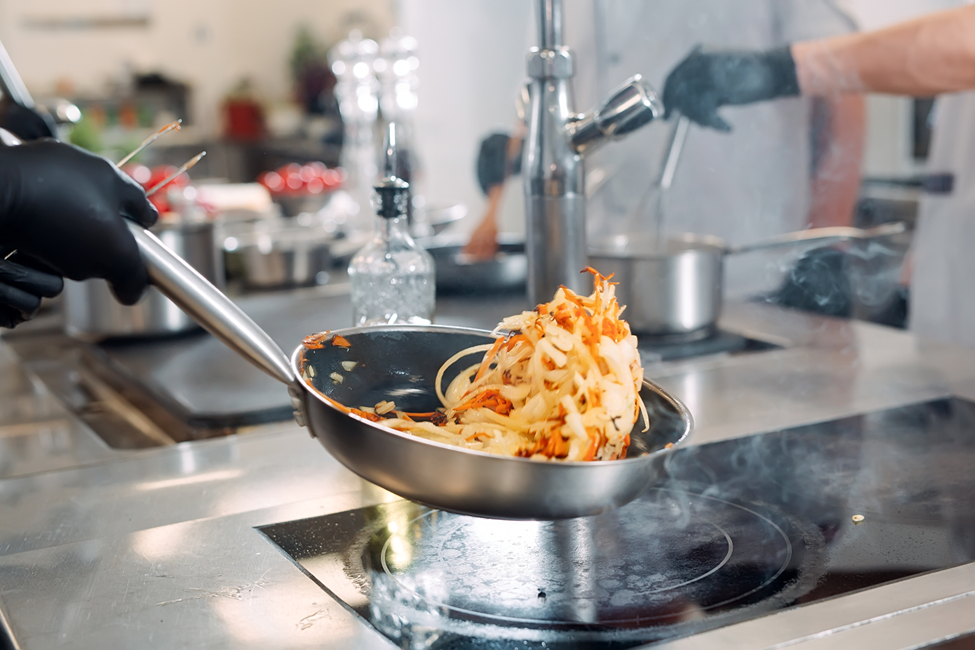
When the LPG supply faltered, kitchens scrambled for alternatives. Biomass, kerosene, and RDF pellets were among the options the government permitted for commercial establishments; but each came with its own operational complexity, safety considerations, and logistics burden.
PNG (Piped Natural Gas) emerged as the most discussed long-term substitute, and rightly so. Where infrastructure exists, it offers a continuous, piped supply that removes cylinder dependency entirely. For many kitchens, it is the right answer.
But electric cooking stands apart — and not just as a backup. Across several dimensions that matter to corporate cafeteria operations, it makes a compelling case as a primary alternative.
Electricity is the most accessible alternative to LPG in India today
PNG coverage in India remains uneven. For a kitchen that is not already on a PNG network, getting connected requires civil infrastructure work, regulatory approvals, and lead time — none of which are available during a supply crisis.
Electricity, by contrast, runs through virtually every commercial building in India. The grid is already there. This makes the transition to electric cooking for commercial kitchens significantly more actionable, particularly for corporate cafeteria operations that are spread across diverse locations.
India's Electricity Grid Is Getting Cleaner — Making Electric Cooking Increasingly Sustainable
India has made significant commitments to renewable energy, with a target of 500 GW of non-fossil fuel capacity by 2030 under its National Electricity Plan. As solar, wind, and hydropower contribute a growing share to the national grid, electricity as a cooking fuel becomes progressively more sustainable.
Electric Equipment Is Safer for Commercial Kitchen Operations
Open-flame cooking carries inherent fire risk. Gas leaks, unattended burners, and pressurised cylinders are among the most common causes of commercial kitchen fires. Industrial induction and other electric cooking equipment eliminates the open flame entirely.
For corporate cafeteria kitchens, the safety profile of electric equipment is a meaningful operational advantage.
Transitioning to Electric Cooking: Not Simple, But Necessary

Transitioning a commercial kitchen from LPG to electric cooking is not a simple switch. India's commercial kitchen ecosystem was built around LPG. Equipment, utensils, cooking techniques, kitchen layouts, and even recipes have all been developed around open-flame gas cooking. The market for commercial-grade electric cooking equipment in India is still maturing. A transition to electric cooking therefore also requires a parallel investment in compatible utensils.
However, this is where the transition begins to reveal an unexpected long-term benefit. By investing in induction-ready cookware, kitchens are effectively building a multi-fuel infrastructure — one that can operate on electric, gas, or any future energy source without further utensil changes.
The transition is expensive in the short term. But kitchens that make this investment are building operational resilience, sustainability, and flexibility into a system that will serve them for the next decade and beyond.

The LPG crisis in India has exposed a critical vulnerability in commercial kitchens: over-reliance on a single fuel source. Electric cooking in corporate cafeterias has moved from being an alternative to becoming a strategic necessity. It addresses immediate challenges—like supply disruptions and safety risks—while also supporting long-term goals such as sustainability and operational resilience.
What began as a crisis response is now shaping a more resilient, flexible, and future-ready foundation for corporate cafeterias.


Comments