


What is a corporate cafeteria?


As workdays grow busier and commutes longer, access to reliable food at work is no longer a convenience, it’s a necessity. A well-run corporate cafeteria plays a critical role in shaping employee experience, daily productivity, and workplace well-being.
What Is a Corporate Cafeteria?
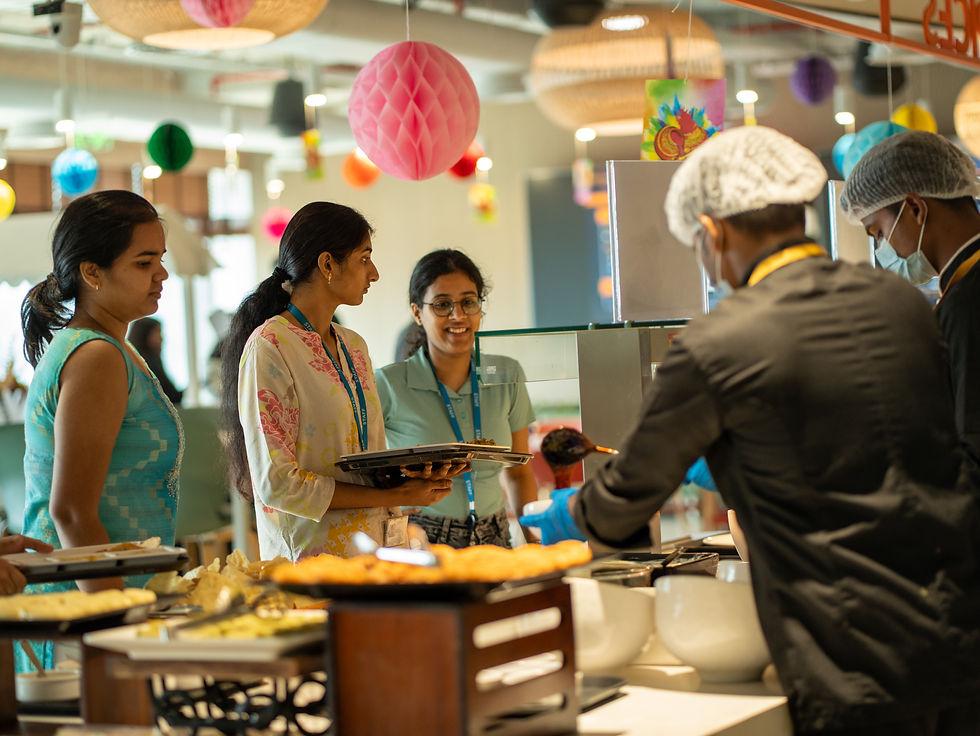
A corporate cafeteria is an on-site dining space within offices or workplace campuses where employees can access meals such as breakfast, lunch, dinner, snacks and beverages without leaving the premises. Unlike ad-hoc food arrangements, an office cafeteria is designed to operate at scale - serving a diverse workforce with consistency, hygiene, and structure.
More than a food service setup, a corporate cafeteria is part of the workplace ecosystem. It reduces daily friction around meals, ensures reliable access to food, and creates a shared space that employees can depend on as part of their workday.

Key Elements of a Corporate Cafeteria
A corporate cafeteria functions through several interconnected elements that ensure reliability, efficiency, and employee trust.
Menu planning
Menus are curated to cater to different preferences and dietary needs, with regular rotation to avoid repetition. This often includes a mix of regional cuisines, comfort meals, lighter options, and occasional special menus aligned with employees’ expectations. Click here for deep dive into menu curation.
Hygiene, safety, and governance
Consistent hygiene practices are foundational. Standardised processes, routine audits, and clear accountability help ensure food safety and build long-term confidence among employees. Click here to know more about SmartQ’s ATC framework for food safety.
Technology
Many cafeterias today use digital systems for ordering and payments. Apps, kiosks, or PWAs (progressive web applications) help reduce queues, improve predictability, and make meal access smoother. For facility teams, these systems also provide visibility into usage patterns, demand, and subsidies.
Cafeteria experience
Beyond food operations, the cafeteria experience matters. It offers employees a mental reset from work - whether through a quick solo meal or informal conversations with colleagues. Cleanliness, ease of service, and consistency together shape how welcoming and usable this space feels over time.

How Corporate Cafeterias Are Structured
Corporate cafeterias are typically structured across a few core operational dimensions. Most workplaces combine elements from each, based on scale, space, and employee needs.
Food preparation
On-site kitchens: Food prepared within office premises, often enabling freshness and customisation.
Off-site kitchens: Food prepared centrally and transported to the workplace, allowing standardisation and scale.
Food service style
Live food service: Certain dishes prepared on demand.
Pre-prepared service: Food cooked in advance and served ready.
Counter-based service: Multiple counters for cuisines or food categories.
Buffet-style service: A consolidated spread served together.
Payment and subsidy models
Subsidised meals: The organisation covers full or partial meal costs. Click here to read more about food subsidies and how to choose the right model for your organisation.
Pay-as-you-eat / Cash-and-carry: Employees pay based on consumption.
Operational structure
Single-vendor setup: One partner manages all food services.
Multi-vendor setup: Multiple specialist vendors coordinated centrally.
All-day cafeterias: Food access available across the workday.
Meal-window cafeterias: Service limited to defined time slots.
These structures are often combined to create cafeteria setups that align with workplace size, attendance patterns, and operational priorities.

Importance of Having a Cafeteria in Office
A cafeteria is no longer a “nice-to-have” in modern workplaces. A recent study by Compass Group found that food services are consistently ranked by employees as one of the most important non‑monetary workplace perks - with 73% of employees ranking café meals as their top priority.
Its value shows up in everyday work life:
Reduces time and effort spent stepping out for meals
Makes hygienic, reliable food easily accessible
Helps employees plan their workday more predictably
Supports sustained energy and focus
Creates opportunities for informal interaction
Signals organisational care and thoughtfulness
For many employees, access to food at work directly affects how manageable and supportive the workday feels.
Role of Food Aggregators in Corporate Cafeterias

Food aggregators play a critical role in simplifying cafeteria management and operations. Rather than focusing only on cooking or service, aggregators manage the entire cafeteria setup and ecosystem.
They coordinate multiple food vendors, standardise hygiene and safety practices, and oversee daily operations through a single point of accountability. By combining operational expertise with technology, they help bring consistency, visibility, and control to cafeteria management. This allows organisations to offer variety without taking on the complexity of managing individual vendors or processes.
Platforms like SmartQ operate in this space by enabling end-to-end cafeteria management - from vendor curation to digital ordering and governance.
When managed thoughtfully, a corporate cafeteria becomes more than a functional facility. It becomes a dependable part of the workplace—supporting nourishment, routine, and everyday human interaction.
SmartQ is a technology-powered food experience company providing end-to-end F&B solutions for corporates; including cafeteria management, vending solutions, corporate events and more; enabled by an in-house digital café suite.
Get in touch to transform your corporate cafeteria today!


Comments